



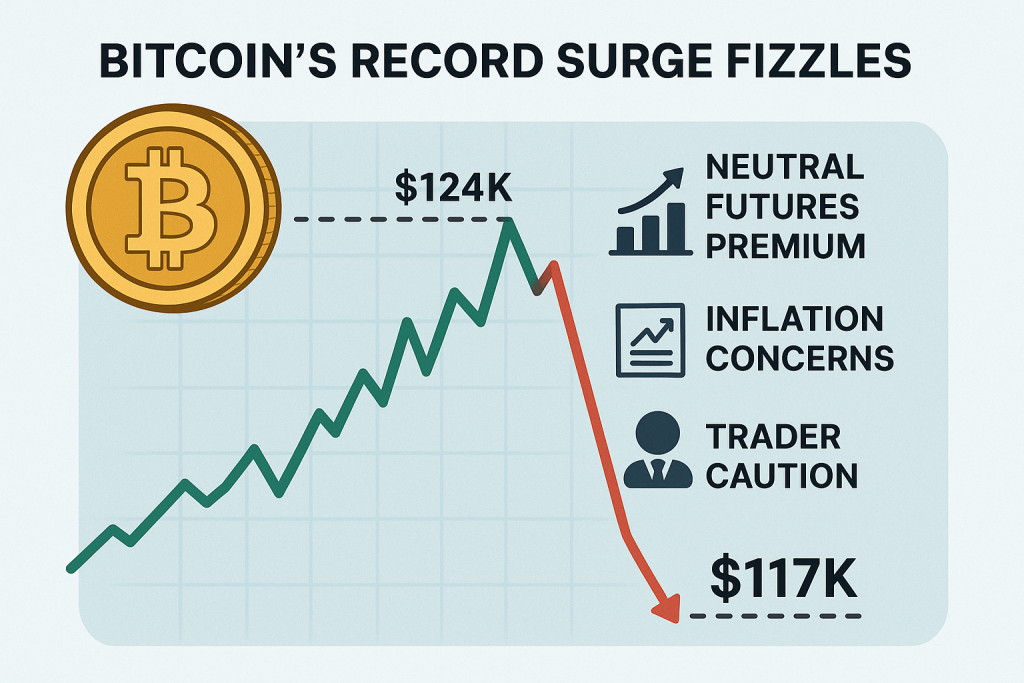
Mixed market signals emerge as Bitcoin drops to $117,000 a day after hitting fresh all-time highs.


Key Takeaways
- BTC futures premium remains neutral despite a $6,600 pullback.
- Options data and macroeconomic pressures show hesitation for a breakout above $120K.
- U.S. inflation data and government statements may have encouraged profit-taking.
Futures Premium Remains Neutral
The BTC 3-month futures annualized premium stayed at 9%, well within the neutral 5–10% zone.
This suggests that the surge to $124K wasn’t fueled by excessive leverage — and that traders remain calm even after the pullback.
However, this stability also signals that a push toward $150K may not be imminent without new catalysts.
Inflation Concerns and Macro Pressures
July’s U.S. Producer Price Index (PPI) rose 3.3% year-over-year, beating forecasts and sparking fears of delayed Federal Reserve rate cuts.
While U.S. equities bounced back quickly, Bitcoin’s losses persisted — hinting at crypto-specific profit-taking.
Fed Rate Cut Odds Slip
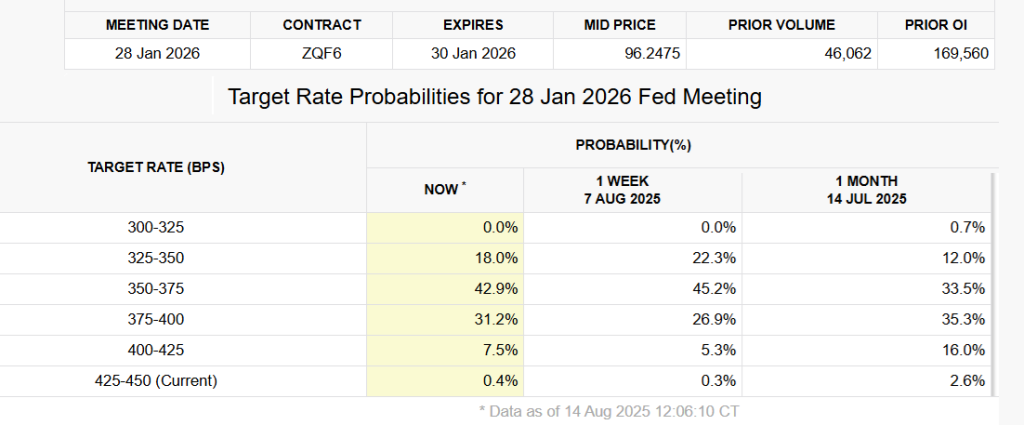
According to CME FedWatch, odds of the Fed lowering rates to 3.75% or below by January 2024 have dropped from 67% to 61% in the past week.
Historically, reduced expectations for aggressive monetary easing weigh on risk assets like Bitcoin.
U.S. Treasury: No New Bitcoin Purchases
U.S. Treasury Secretary Scott Bessent said there are no current plans to add more Bitcoin to government reserves or redirect gold sale proceeds into BTC.
This runs counter to earlier speculation following President Trump’s March Executive Order, which encouraged “budget-neutral strategies” for acquiring more Bitcoin.
Options Market Shows Calm
The BTC 30-day options delta skew — an indicator of market sentiment — sits at 3%, signaling balanced positioning.
This means traders aren’t heavily betting on a crash below $110K or an explosive rally above $120K.
The Bigger Picture
With U.S. stocks recovering and Bitcoin still trading near historical highs, this drop appears to be strategic profit-taking rather than a sign of panic.
Still, macro risks remain: U.S. national debt has now passed $37 trillion, and global central banks continue to expand balance sheets — a backdrop that could support Bitcoin in 2025.
Disclaimer: This article is for informational purposes only and does not constitute financial advice.