


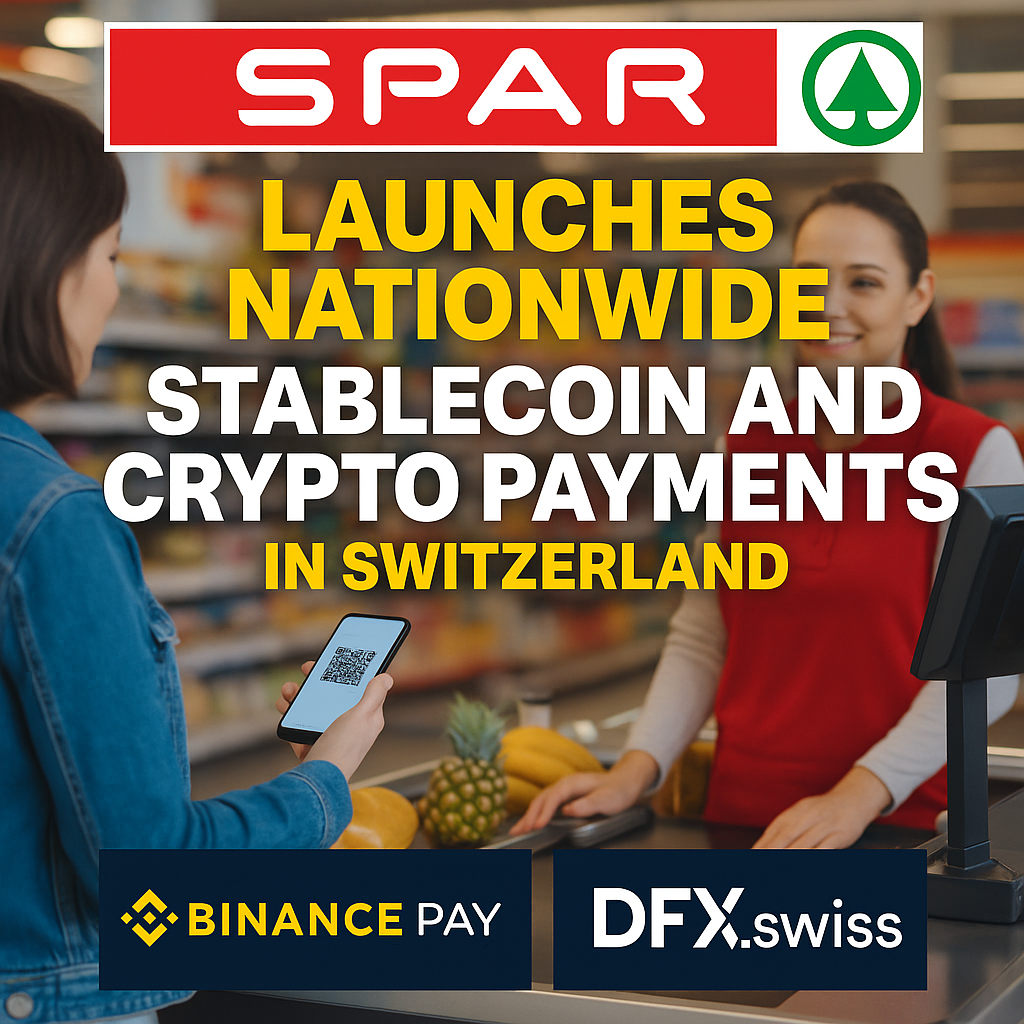
The supermarket chain teams up with Binance Pay and DFX.swiss to enable digital asset payments in a move set to reshape retail transactions in Switzerland.
Crypto at the Checkout
Spar Switzerland is introducing stablecoin and cryptocurrency payments across its 300 supermarket locations, becoming the first nationwide retail chain in the country to integrate digital asset transactions.


The rollout is being powered by a partnership with Binance Pay and Swiss fintech firm DFX.swiss, enabling customers to pay with over 100 cryptocurrencies and stablecoins.
Rollout Timeline and Current Availability
The service is already live in 100 Spar stores, with the remaining branches scheduled to join in the coming months.
While the goal is to cover the entire national network, a full rollout timeline has not yet been confirmed, according to a Spar spokesperson.
Lower Fees and Gas-Free Payments
André Scherrer, Managing Director at Spar Switzerland, highlighted that crypto payments could cut merchant transaction fees by up to two-thirds compared to credit card payments.
Through DFX.swiss’s interface, purchases will be gas-free, settled in Swiss francs (or other currencies upon request). Customers simply scan a QR code via the Binance Pay app, choose their preferred token, and the payment is instantly converted into CHF for the store.
Crypto Adoption Gains Retail Momentum
Switzerland has long been one of Europe’s most crypto-friendly nations, with over 1,000 shops already accepting Bitcoin and other digital assets, according to BTCmap data.
Spar’s move follows several notable milestones:
- In April 2024, a Spar store in Zug began accepting Bitcoin via the Lightning Network.
- The city of Lugano adopted Bitcoin and Tether (USDT) for municipal payments in 2023 — a world first for local government.
Potential Impact on the Retail Sector
The growing integration of crypto payment solutions could signal a broader shift in consumer payment preferences, especially in countries with strong digital asset ecosystems.
Spar’s initiative may serve as a model for other retailers in Switzerland — and across Europe — looking to lower transaction costs and cater to a tech-savvy customer base.